
COMPOSITE CABLE MANAGEMENT

GRP and FRP Cable Ladders in the UAE

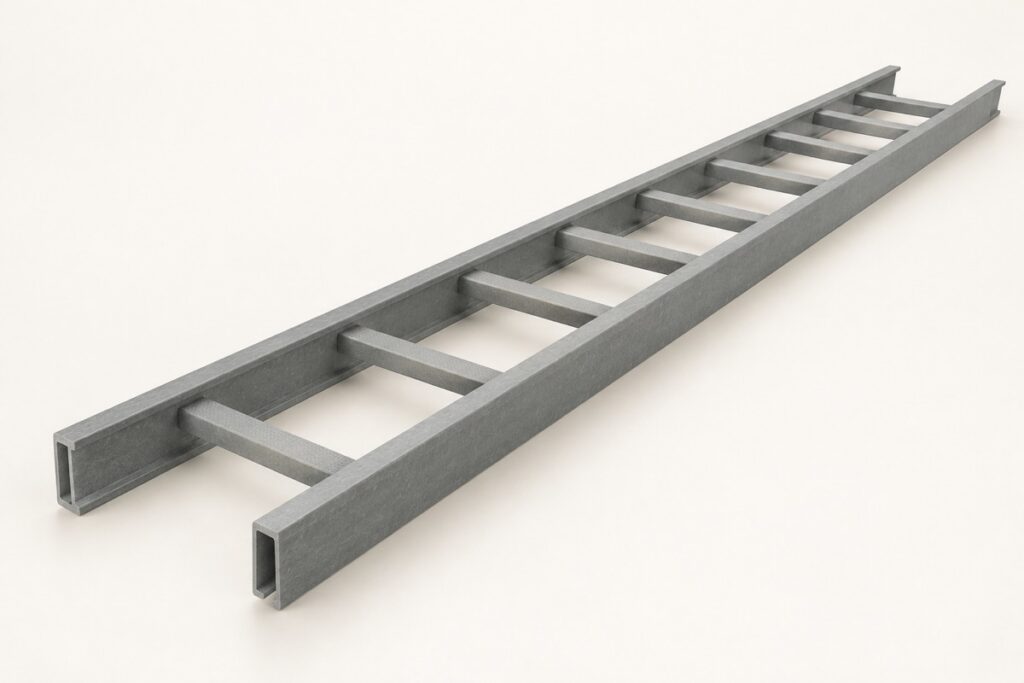
Illustration of a grey GRP and FRP cable ladder with side rails and regularly spaced rungs
Product illustration. Confirm the offered construction and dimensions in the quotation.

Bonn Metals manufactures and supplies GRP/FRP cable ladders for projects across the UAE. Discuss your cable route, required dimensions and installation environment so the offered ladder, fittings and supports can be reviewed together.

A composite ladder system for planned cable routes

Cable ladders use side rails and transverse rungs to support cables along a route. In a GRP/FRP ladder, the composite construction and connection details are part of the system specification. Review the ladder configuration, cable support needs and fitting arrangement before confirming the product.

Rail, rung and support requirements

Confirm the usable width, rail depth, section length and rung spacing against the cable layout. Request the relevant product load/span information, including any conditions associated with joints and support positions. Do not assume that a stated straight-section rating applies unchanged to every fitting or installation arrangement.

Material and environment

For industrial or outdoor installations, provide environmental exposure and operating conditions with the enquiry. Confirm the offered resin system and documentation for chemical compatibility, temperature, UV exposure and project fire requirements. Do not infer these properties from colour or from the term GRP alone.

Complete the route

List bends, tees, crossings, reducers, covers, splice components and hold-down arrangements as required. Coordinate supports and fixing materials with the proposed ladder system. Use the product’s installation instructions when assessing jointing and site modifications.

Enquiry checklist

Product name is enough to start. If available, add required width and depth, quantities or route length, cable loading, support spacing, exposure conditions and project location. Drawing upload is not required.

Rails, rungs and composite construction

A GRP/FRP cable ladder combines side rails and transverse rungs in a composite cable support arrangement. Identify the construction of both parts and their connection details when comparing proposals. Usable width, rail depth, section length and rung spacing should be stated together with the product or profile reference used in the project.

Glass-fibre reinforcement makes GRP part of the wider FRP family. These abbreviations describe a material family rather than a universal duty class. Ask for the actual resin and construction information and confirm which product data applies to the offered ladder, its fittings and the proposed support arrangement.

Environmental selection for composite ladder routes

Describe the service environment before choosing the composite requirement. Include indoor or outdoor exposure, process substances, operating temperatures and other conditions defined by the project. Where chemical contact is relevant, identify the substance and concentration as well as the expected conditions of exposure.

Request the information needed to review the actual resin system and ladder construction. Environmental suitability should be tied to the proposed product, rather than inferred from a broad corrosion-resistance statement. Keep any specified UV, temperature or chemical requirements visible in the quotation so that alternative constructions can be compared on the same basis.

Specify fire and electrical evidence clearly

If the project requires a particular fire, smoke or electrical classification, identify the requirement by test method and acceptance basis. Ask for documents applicable to the actual offered product and construction. A resin description or a general product-family statement should not be treated as proof of every property listed in the specification.

Review the entire installed arrangement with the responsible project engineer, including metallic clamps, fasteners and supporting steelwork where used. A non-metallic ladder does not remove the need to coordinate the electrical design of the surrounding installation. Keep product evidence and project design responsibilities distinct in the technical submission.

Cable loading, rung support and mounting orientation

State the cable loading and proposed support spacing together and identify horizontal, vertical or other route orientations. Include the cable arrangement and any specified restraint requirements. Ask for the applicable product information for the complete ladder construction, including the rails, rungs and connections used in the proposed system.

Do not use the dimensions of a steel ladder as the sole basis for selecting a composite equivalent. The alternative should be assessed using its own load/span data and installation details. Where a route includes risers or unusual supports, identify those conditions before the product is approved so the relevant information can be reviewed.

Coordinate fittings, installation and replacement parts

Schedule horizontal bends, vertical changes, branches and reducers with their required sizes and orientations. Include joints, clamps and the support hardware that belongs in the package. Confirm compatible connection details and fitting support positions against the offered system information rather than treating all nominally similar accessories as interchangeable.

Plan cable installation access and any expected site fabrication before delivery. Request the applicable handling, cutting and drilling guidance and confirm any treatment required after modification. Retain product references and accepted documents for maintenance so later replacement fittings and route extensions can be checked against the installed ladder construction.

Technical review and approval documents

Identify the documents your project needs at the enquiry stage, such as the offered product drawing, material information, finish details and applicable performance data. Link requests to the relevant item reference and specification revision. Where a document covers several products, ask which construction and configuration it supports so the approval record matches the material being ordered.

Keep technical acceptance separate from commercial confirmation. Record any approved alternatives, unresolved inputs and items supplied by others before releasing the order. If the route or application changes, review the affected product and connection details using the revised project information. This helps the order remain consistent with the approved requirement rather than carrying forward assumptions from an earlier layout.

Quotation, delivery and project coordination

Bonn Metals serves projects across Dubai, Abu Dhabi and the other UAE emirates. Begin with the product name, then include dimensions, material, finish, quantities and the project location when available. Use the enquiry form or WhatsApp to start the discussion; an initial drawing upload is not required. For a mixed package, give each product and accessory a separate schedule reference.

Include the required programme, delivery area and any phased quantities in the enquiry. Availability, order quantities, packing arrangements, prices and delivery commitments are confirmed in the quotation. Review the accepted scope and document revision before placing the order, and identify changes clearly so the supply can be checked against the latest agreed schedule.

FAQ

FRP refers to fibre-reinforced polymer composites; GRP identifies glass-fibre reinforcement within that family. For a glass-fibre cable ladder, both descriptions may be used. Confirm the actual resin, rails, rungs and connection construction instead of treating the abbreviations as duty ratings.

Give usable width, side rail depth, section length and rung spacing, with any specified profile or construction reference. Include quantities, cable loading and support spacing where known. Identify vertical runs or other special mounting arrangements separately.

Use the same route, cable arrangement, loading, support inputs, exposure and required documents for each proposal. Compare the actual constructions and applicable performance information. Similar nominal dimensions do not establish that both products use the same support spacing or accessories.

Suitability depends on the actual product and exposure conditions. Identify chemicals, concentrations, temperatures and contact conditions for review. Request compatibility information for the offered resin and construction rather than relying on the general description of the installation.

No classification should be assumed from the material name. State the project’s test method and acceptance criteria and request the applicable evidence for the offered ladder. Check the product and construction covered by the documents before approval.

Review the proposed clamp, contact geometry, material and connection arrangement with the composite system details. A similar width does not confirm suitability. Identify the required support hardware in the enquiry so compatibility can be checked before ordering.

Include the exposure, operating conditions, UV or temperature requirements, cable loading and proposed supports. Ask for product information relevant to those conditions. The project team should review the complete arrangement before accepting the selected construction.

Identify the vertical orientation, cable arrangement, restraint requirements and support positions in the project information. Request the relevant installation guidance for the offered ladder. Do not apply details from a horizontal route without reviewing the different mounting condition.

Request the offered product’s instructions before planning cutting, drilling or other alterations. Confirm the accepted method and any treatment required afterwards. Keep changes consistent with the approved detail and the project’s technical review process.

Yes. Schedule straight lengths, bends, branches, reducers, joints, clamps and supports under separate references. Include size, orientation, material requirements and quantity. Confirm which structural fixings belong to the supply and which are provided by another package.

Explore related systems

GRP / FRP cable trays

Steel cable ladders

Cable management accessories

Tell us which product your project needs.

Start with the product name. Add dimensions, quantity and project location if available. Drawing upload is not required.

EXPLORE THE COMPOSITE RANGE

Plan your GRP and FRP cable management system

Compare GRP trays and FRP ladders, review the installation environment and coordinate the fittings and supports around your cable route. Our composite system guide brings these selection points together for contractors, consultants and procurement teams.

SELECTION AT A GLANCE

Specify your GRP / FRP ladder system

Bring the material, dimensions, installation and matching components together when planning your grp / frp ladder enquiry.

Material

Define the construction

  • Material and protective finish
  • Project-specific requirements
Dimensions

Size the product

  • Width, depth and thickness
  • Required lengths and quantities
Installation

Review the complete assembly

  • Loads and support arrangement
  • Connections and access
Supply package

Schedule the matching parts

  • Fittings and fixing interfaces
  • Item references and quantities

Types and system options

Straight composite ladders

Two side rails and spaced rungs provide an open cable support route.

GRP / FRP route fittings

Coordinate composite bends, tees and width transitions.

Cover and mounting options

Identify required covers, splice plates, hold-downs and support interfaces.

Technical specifications

Published range information; the quotation identifies the selected size, construction and finish. Load/span and performance data apply to the offered configuration.
ParameterRange / specification
MaterialGlass-reinforced polyester (GRP / FRP)
Width100–1000 mm
Side rail height50–150 mm
Rung spacing250 mm
Surface / colourGel-coat finish; light grey, yellow or project colour
COMPLETE THE SYSTEM

Matching accessories for your route

Schedule these components with the straight sections and supporting assembly.
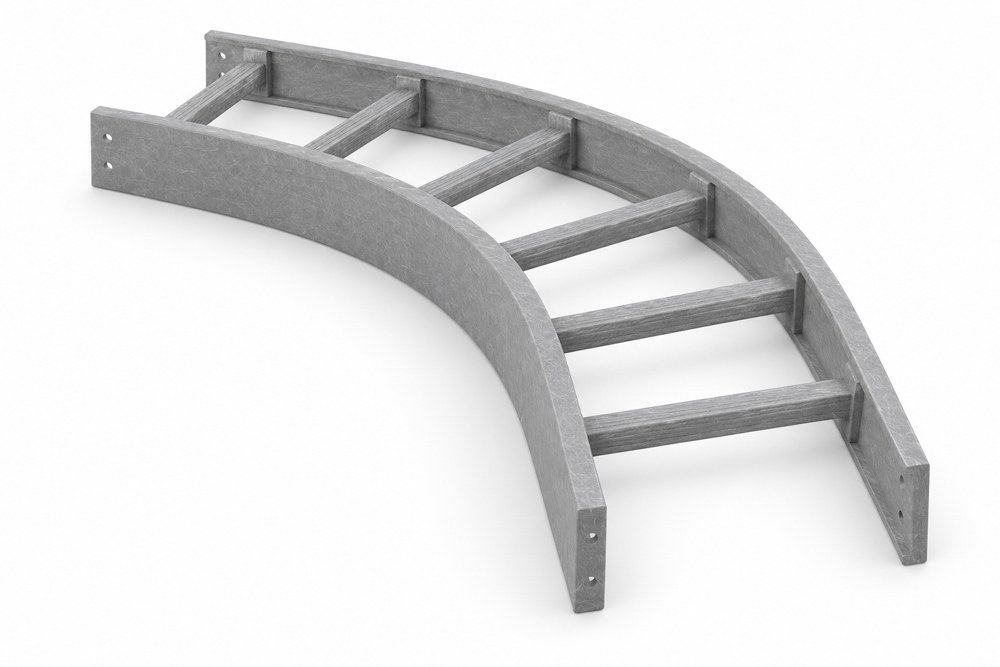
GRP / FRP ladder bends — GRP / FRP ladder accessory illustration

GRP / FRP ladder bends

Change direction with composite side rails and open rungs.
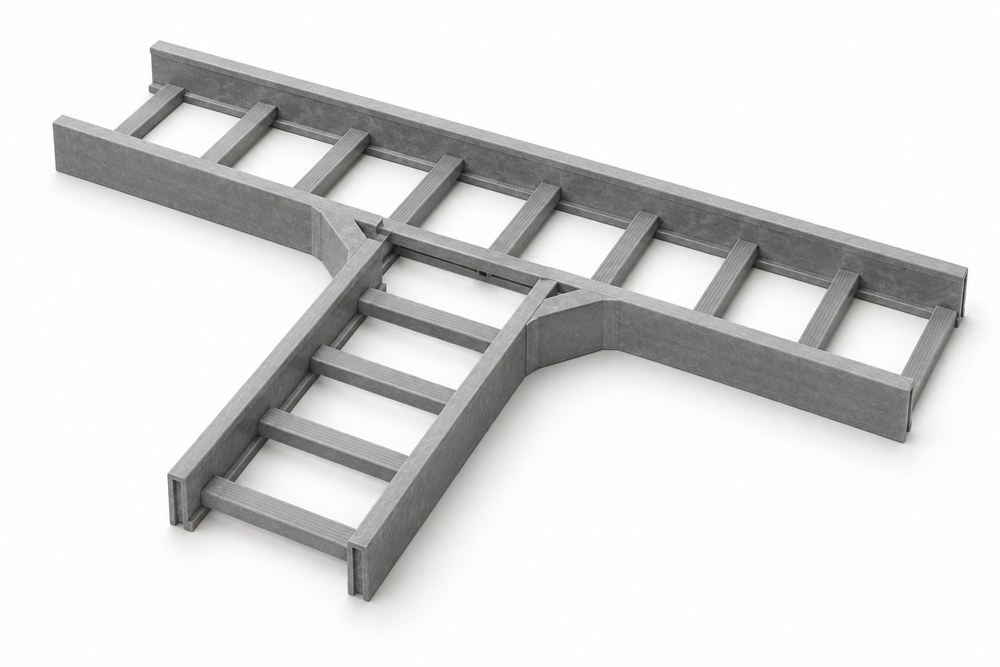
GRP / FRP ladder tees — GRP / FRP ladder accessory illustration

GRP / FRP ladder tees

Create a three-way branch within the composite ladder route.
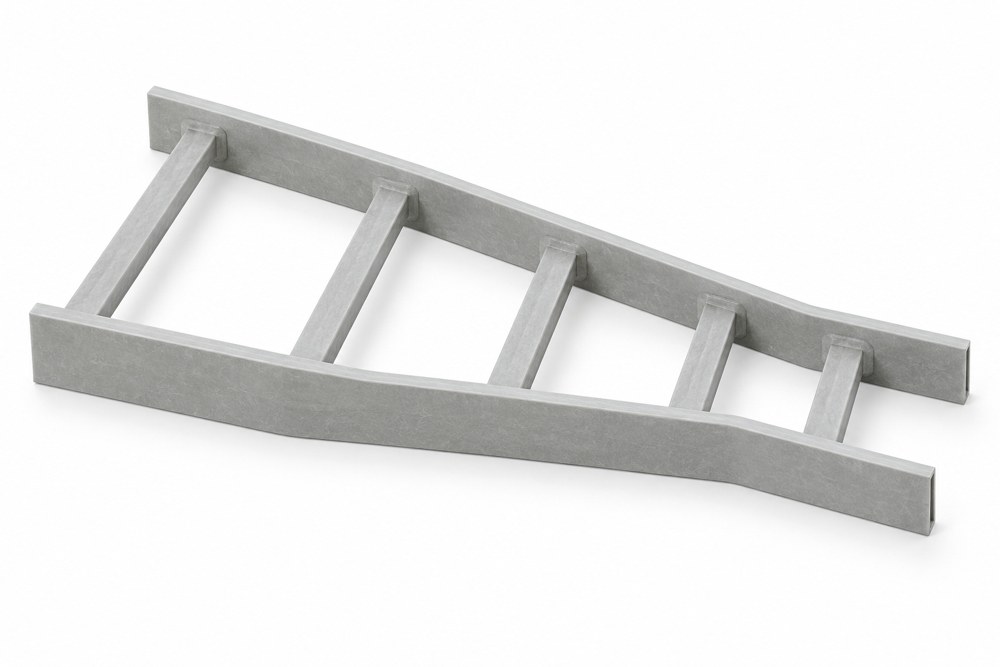
GRP / FRP ladder reducers — GRP / FRP ladder accessory illustration

GRP / FRP ladder reducers

Transition between ladder widths using tapering composite rails and coordinated rungs.
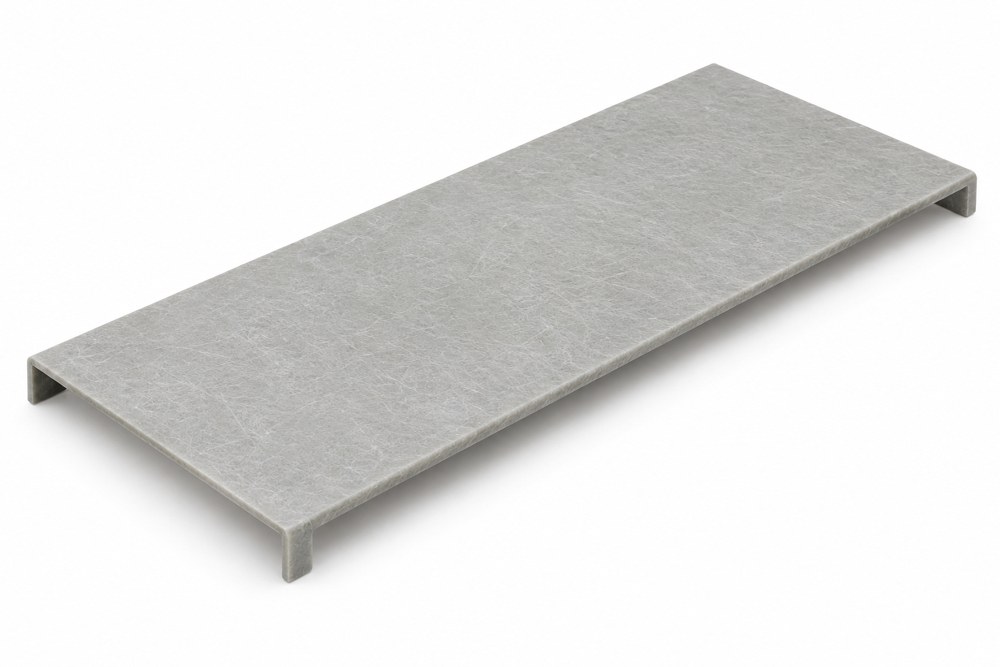
GRP / FRP covers — GRP / FRP ladder accessory illustration

GRP / FRP covers

Specify the cover width, profile and retaining parts for the offered ladder.

Product illustrations show the accessory family. Final geometry and material follow the selected system.

Explore cable management accessories
YOUR PROJECT, CONNECTED

Why discuss your package with Bonn Metal?

A coordinated product range

Bring GRP/FRP, steel and HDG containment, fittings and support requirements into one product discussion.

Manufacturing capability

Bonn Metal is a manufacturer and supplier. Its own hot-dip galvanising plant supports the metallic product range.

UAE project coverage

Discuss supply across all seven emirates, including Dubai and Abu Dhabi, with the project location and programme.

1

Select the system

Start with the product name and intended installation.

2

Share the requirement

Add sizes, quantities, finish and location when available.

3

Confirm the quotation

Review the proposed product, documentation and supply terms.

Discuss your product requirement