BONN METALS
Bonn Metal manufactures and supplies GRP and FRP cable trays, composite cable ladders and compatible route components for projects across Dubai, Abu Dhabi and the UAE. Compare fiberglass cable management with steel and HDG options, then define the construction, environment, loading and documents needed for your project.
GRP stands for glass-reinforced plastic, a composite that combines glass-fibre reinforcement with a polymer resin. FRP describes the wider family of fibre-reinforced polymer materials. A glass-fibre cable tray or ladder can therefore be described as both GRP and FRP. Fiberglass and fibreglass are alternative spellings commonly encountered in product searches and procurement documents.
These terms help identify the material family, but they do not describe every feature of a product. The resin, reinforcement arrangement, profile geometry and connections still need to be specified. When comparing GRP cable management proposals, use the actual product reference and technical information. This makes it easier to distinguish a difference in wording from a meaningful difference in construction or performance.
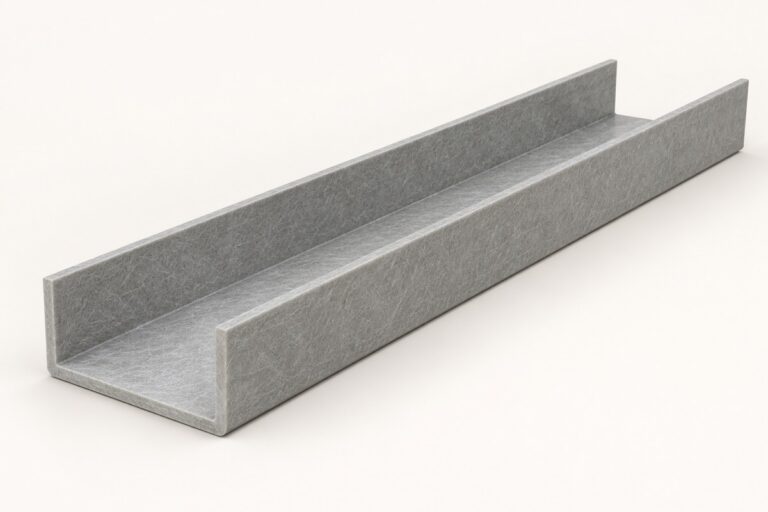
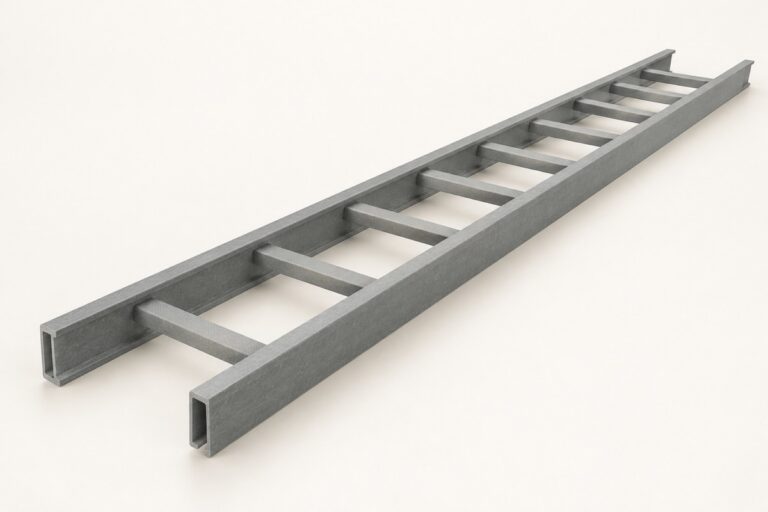
Begin with the cables and the route. A tray arrangement provides a cable-supporting base, while a ladder uses transverse rungs connected to side rails. Identify the cable types, their arrangement and any required support or restraint details before deciding between the two. The route should also leave the access needed to install cables, inspect connections and make future changes.
Review usable width, side depth or rail depth, section length and the relevant base or rung details. A route with several equipment connections may need different fittings from a long distribution run. Explore our GRP/FRP cable trays and composite cable ladders for the product-specific questions to confirm. Schedule direction changes, branches and covers with the straight sections so the quotation describes a complete route.
Give the enquiry a useful description of the installation area. State whether the route is indoors, outdoors, sheltered or exposed, and identify moisture, process substances or other conditions relevant to material selection. For a project with several operating zones, describe each zone separately instead of assigning one general environment label to the whole facility.
Where chemical exposure matters, provide the substance, concentration, temperature and contact conditions available from the project. Request compatibility information for the offered resin and construction. A broad description such as corrosion resistant does not resolve every exposure question. The proposed GRP or FRP cable support system should be reviewed against the actual service conditions, with any unresolved inputs recorded before the material is approved.
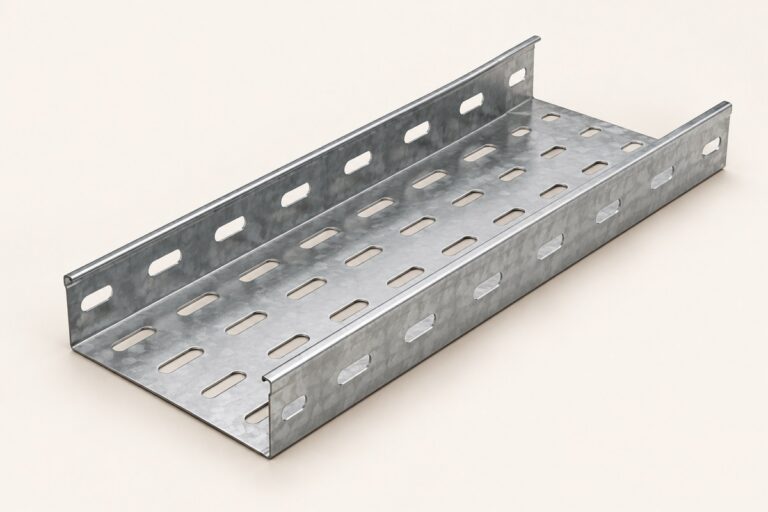
Use the same project inputs when comparing material options. Keep the cable arrangement, route geometry, loading, support spacing and required documents consistent across the offers. For steel, identify the grade and protective finish. For an HDG proposal, state the galvanising requirement and how fabrication, fittings and connecting hardware belong in the coating scope. Bonn Metals operates its own hot-dip galvanising plant.
For a fiberglass cable tray or ladder, ask for the resin and construction details relevant to the application. Compare the complete offered systems, including their joints and supports, rather than matching nominal widths alone. Keep alternatives clearly separated in the quotation. This allows the project team to assess material differences alongside the installation and commercial scope without assuming that each option uses identical components or support details.
Provide cable loading and proposed support spacing together. Identify horizontal runs, risers, changes of level and any unusual mounting orientation. Where future cables form part of the design, state the intended allowance so it can be included in the review. Available width alone should not be treated as evidence of structural capacity.
Request the applicable load/span information for the actual GRP tray or FRP ladder construction. The support arrangement also includes brackets, channel framing, clamps, structural fixings and the building interface. Confirm which parts belong to the offered package and which are supplied or designed by others. Review fitting supports and joint positions using the proposed system information, particularly at branches and changes of direction. The accepted arrangement should follow the project requirements and the offered-product guidance.
Identify any specified fire behaviour, smoke, ultraviolet exposure or service-temperature requirement at the enquiry stage. Provide the test method or acceptance criteria used by the project and ask which documents apply to the offered product. A material name, colour or general certificate description should not be treated as proof of a particular classification.
Electrical design requirements also need coordination with the responsible project engineer. A non-metallic cable route may still include metallic fasteners, clamps and supporting steelwork. Review the complete installed arrangement and request product-specific evidence where the specification calls for it. Keep the scope of each document clear: evidence for a particular construction or test condition should be checked before being applied to a different product, assembly or installation condition.
List horizontal bends, internal and external vertical changes, tees, crosses and reducers with their sizes and orientations. Add cover requirements, splice components and associated fasteners. Keep each fitting linked to its parent tray or ladder reference so components intended for different routes remain identifiable throughout quotation, ordering and delivery.
Check the proposed connection details rather than assuming that accessories are universal. A shared nominal width does not establish matching hole positions, joint geometry or material compatibility. Coordinate brackets and clamps with the offered composite profile, and identify expected site cutting or drilling before installation. Request the relevant handling, fabrication and installation guidance. Retain the accepted product references for maintenance so later route extensions and replacement fittings can be reviewed against the installed GRP/FRP system.
Start with the product name: GRP cable tray, FRP cable ladder or the specific fitting required. Add dimensions, material preferences, quantities and the project emirate when available. Include the route environment, cable loading, proposed support spacing and required approval documents as the schedule develops. An initial drawing upload is not required to begin the discussion.
For a mixed package, keep straight lengths, fittings, covers and supports on separate lines. State the required programme and identify any phased quantities. Use the Bonn Metals enquiry form or WhatsApp to discuss GRP and FRP cable management for Dubai, Abu Dhabi and projects across all seven UAE emirates.
GRP is a type of FRP that uses glass-fibre reinforcement. A glass-fibre tray or ladder may be described with either term. Compare the actual resin, construction, dimensions and product documents to identify meaningful differences between proposals.
Fiberglass is another term commonly used for glass-fibre composite construction. For procurement, identify the actual tray profile, resin requirement, dimensions and compatible components. The name alone does not establish a load rating or environmental classification.
Review the cable types, support and restraint requirements, route geometry and access needed for installation. Compare the actual tray base or ladder rung arrangement and the offered product information. Include the required fittings and supports in the selection.
Describe the outdoor exposure, operating temperature and any specified UV or fire requirements for review. Request the relevant evidence for the offered construction. Confirm the complete system against the project conditions before approval.
Provide the chemical, concentration, temperature and expected contact conditions where known. Request compatibility information for the proposed resin and product construction. A general description such as industrial or corrosive does not resolve every selection detail.
No classification should be assumed from the material name. Identify the required test method and acceptance criteria, then request evidence applicable to the actual offered product and construction. Confirm the scope of the documents during technical review.
Assess each proposed construction using its applicable load/span and installation information. Provide the same cable loading and route inputs for a fair comparison. Similar width and depth do not establish an identical support arrangement.
Review the proposed fitting, connection geometry, material and exposure with the composite system details. Include any metallic hardware in the project’s electrical and material review. Do not assume compatibility from nominal dimensions alone.
Request the offered product’s fabrication and installation guidance before planning site changes. Confirm the accepted method and any treatment required afterwards. Keep alterations consistent with the approved construction and project review process.
Send the product name through the enquiry form or WhatsApp. Add dimensions, quantities, environment, loading, supports and project location when available. Drawing upload is not required for the initial enquiry; technical and supply details are confirmed with the quotation.
Send Bonn Metal the product name, dimensions, finish, quantity and project location to start your enquiry.