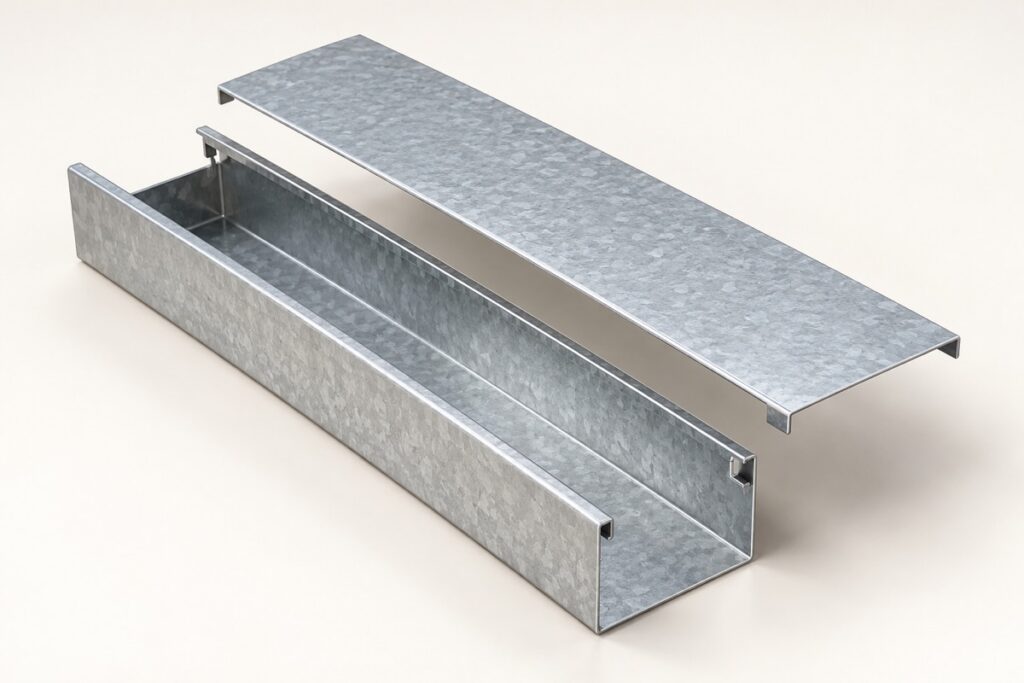
Define the construction
- Material and protective finish
- Project-specific requirements

STEEL CABLE MANAGEMENT & SUPPORTS
Bonn Metals manufactures and supplies steel cable trunking for enclosed cable routing in building services and industrial projects. Review the trunking section, cover arrangement, finish and fittings against the project requirements.
Cable trunking combines a channel body with a cover arrangement. Select the width and depth against the cable layout, required segregation and space available for cover removal. Access for cable additions, inspection and maintenance should be considered before confirming the route.
State the required material and finish with the enquiry. For powder coated trunking, identify the colour and applicable coating requirements. For galvanised trunking, distinguish the intended coating process and consider how fabrication and site modifications affect the finish.
Schedule covers, couplers, internal or external bends, tees and end components alongside straight lengths. Confirm how covers are retained and where access is needed. Select the joining arrangement and fasteners for the offered system rather than combining unrelated components by nominal size alone.
An enclosed shape does not by itself establish weatherproofing, a fire rating or an ingress protection classification. Request product-specific documentation where these are project requirements. Coordinate electrical continuity, bonding, cable segregation and fixing details with the project electrical design.
The product name is enough to start. Add section size, thickness, finish, quantities, cover details and delivery location if available. Include fittings and any approval documentation required so the proposed supply can be reviewed before ordering.
| Selection detail | What to confirm |
|---|---|
| Section | Internal routing width, depth, length and thickness |
| Cover | Retention, access and any required partitions |
| Finish | Defined GI, HDG or powder coated specification |
| Route fittings | Bends, tees, couplers and end components |
| Documentation | Applicable drawings and any specified performance reports |
Define the cables to be routed, their separation requirements and the position of branch connections before choosing trunking. A route inside a building may need coordinated access at ceiling zones, equipment rooms and changes of level. Record the space available for the body and for removing its cover after neighbouring services have been installed.
Trunking should be scheduled as a complete enclosure arrangement with the relevant cover, joints and fittings. Identify where the route terminates, passes into equipment or changes section. The description “enclosed” is a construction description; any required protection classification should be confirmed for the complete offered assembly, including connections and entries.
State the body width, depth, section length and material thickness using the project’s dimensional convention. Confirm whether dimensions refer to the external body or usable internal space. Include the cover arrangement and retention method required by the specification, together with any divider or compartment detail.
Where different services share a route, the project design should define segregation and the cable arrangement. List divider lengths and fitting details separately where they form part of the supply. Check that joint components, internal obstructions and cable entries are coordinated with the space needed for the actual cables rather than comparing nominal body dimensions alone.
Prepare a fitting schedule for horizontal bends, internal and external vertical bends, tees, crosses and reducers. Identify direction, size and the relevant cover requirements. Include end caps, coupling pieces and entry details where the layout requires them. The geometry should suit both the cable route and the available installation space.
Coordinate cable entries with the equipment and with the project’s requirements for edge treatment, glands or other entry hardware. Confirm which parts are included in the trunking supply and which belong to the equipment package. Clear item references reduce confusion when similar fittings serve different levels or compartments.
Review the steel and coating requirements against the installation environment. State any colour or coating system specified by the project and identify whether special fabrication is required before finishing. Keep the finish of coupling components, covers and fixings coordinated with the trunking body.
Plan support locations and the sequence for fitting covers around other services. An installed run must remain accessible where the project requires inspection or future cable work. Request the product information and installation details needed for review before ordering, and record any agreed changes to the enclosure arrangement in the approved schedule.
Identify the documents your project needs at the enquiry stage, such as the offered product drawing, material information, finish details and applicable performance data. Link requests to the relevant item reference and specification revision. Where a document covers several products, ask which construction and configuration it supports so the approval record matches the material being ordered.
Keep technical acceptance separate from commercial confirmation. Record any approved alternatives, unresolved inputs and items supplied by others before releasing the order. If the route or application changes, review the affected product and connection details using the revised project information. This helps the order remain consistent with the approved requirement rather than carrying forward assumptions from an earlier layout.
Bonn Metals serves projects across Dubai, Abu Dhabi and the other UAE emirates. Begin with the product name, then include dimensions, material, finish, quantities and the project location when available. Use the enquiry form or WhatsApp to start the discussion; an initial drawing upload is not required. For a mixed package, give each product and accessory a separate schedule reference.
Include the required programme, delivery area and any phased quantities in the enquiry. Availability, order quantities, packing arrangements, prices and delivery commitments are confirmed in the quotation. Review the accepted scope and document revision before placing the order, and identify changes clearly so the supply can be checked against the latest agreed schedule.
No. Environmental suitability and any ingress protection classification must be established for the actual product and installation.
Coordinate cable segregation and any required partitions with the electrical and ICT design and applicable project requirements.
Include the required colour and coating specification. Availability and commercial terms are confirmed with the quotation.
State width, depth, length and thickness with units, and clarify whether dimensions describe the outer body or usable space. Include the cover and compartment arrangement. A section reference or approved detail helps distinguish similar trunking constructions.
Confirm any required ingress or environmental protection classification for the complete offered assembly. Covers, joints, fittings and cable entries all form part of that review. The presence of a lid alone is not evidence of a particular classification.
Describe the required compartments and segregation detail in the enquiry. Include divider lengths, fitting requirements and any interfaces at branches or entries. The quotation should identify the exact compartment arrangement and its associated components.
Schedule bends, branches, reducers, couplings, end caps and entry components required by the layout. Add orientation, size, material, finish and quantity. The relevant cover arrangement should be clear for both straight lengths and fittings.
Use the standard applicable to the product specified. IEC 61537 addresses cable tray and ladder systems and excludes cable trunking from its scope. Ask the project team to identify the required trunking standard and request the relevant offered-product documentation.
Coordinate the removal space, support positions and neighbouring services during route planning. Identify areas above ceilings or behind equipment where access is restricted. Confirm the cover fitting method and maintenance requirements using the proposed product details.
Request a quotation for supply across Dubai, Abu Dhabi and the UAE. Add dimensions, material, quantities and project location if available. Drawing upload is not required.
Bring the material, dimensions, installation and matching components together when planning your steel trunking enquiry.
A channel body and removable cover for enclosed cable routing.
Section and finish selected for the specified route and installation environment.
Discuss slots and entries where the control-panel or equipment design requires them.
| Parameter | Range / specification |
|---|---|
| Width | 50–600 mm |
| Height | 50–150 mm |
| Thickness | 0.8–2.0 mm |
| Section length | 2.5 m or 3 m |
| Finish options | Mild steel, pre-galvanised, HDG or powder-coated |
Schedule these components with the straight sections and supporting assembly.
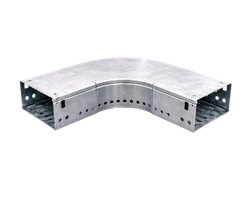
Turn the enclosure on the same level with compatible cover geometry.
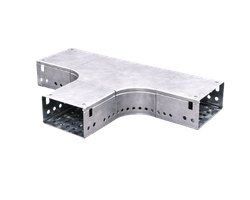
Branch the trunking route with the required compartments and covers.
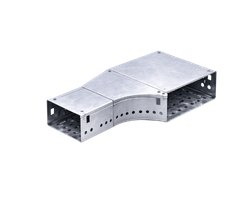
Change section width while coordinating the enclosure and cover.
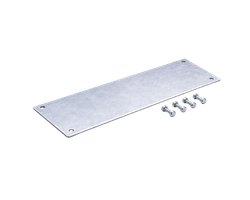
Keep access and retention details matched to the offered enclosure.
Product illustrations show the accessory family. Final geometry and material follow the selected system.
Explore cable management accessoriesBring GRP/FRP, steel and HDG containment, fittings and support requirements into one product discussion.
Bonn Metal is a manufacturer and supplier. Its own hot-dip galvanising plant supports the metallic product range.
Discuss supply across all seven emirates, including Dubai and Abu Dhabi, with the project location and programme.
Start with the product name and intended installation.
Add sizes, quantities, finish and location when available.
Review the proposed product, documentation and supply terms.