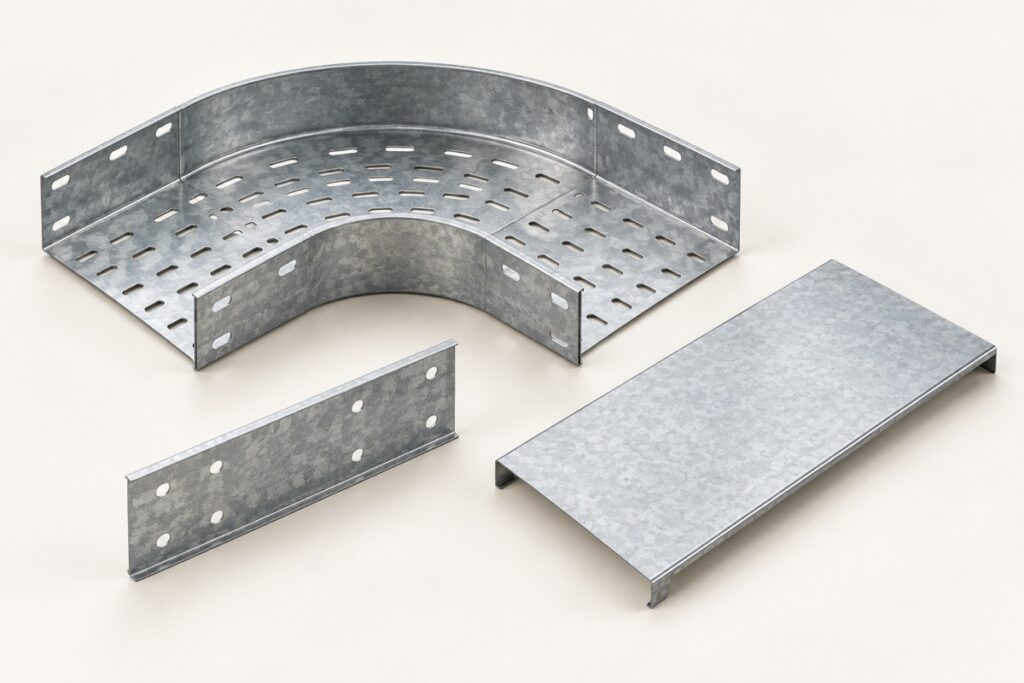
Define the construction
- Material and protective finish
- Project-specific requirements

STEEL CABLE MANAGEMENT & SUPPORTS
Bonn Metals supplies cable management accessories alongside trays, ladders, trunking and framing systems. Identify each route fitting and support component against the selected system so the quotation covers more than straight lengths.
List horizontal bends, vertical changes, tees and crosses by system type and size. Include the direction and geometry needed to suit the cable route and space available. Confirm bend radii and the support requirements for the actual fitting.
Reducers coordinate changes in route width. Splice components connect sections, while covers provide the specified cover arrangement. Select these parts for the actual tray or ladder profile. A fitting that looks similar or shares a nominal width may still have different fixing geometry.
Include brackets, clamps, channel fittings, nuts and other required mounting components in the schedule. Confirm thread sizes, hole patterns, finishes and supporting conditions. Separate containment joints from structural fixings so the quotation identifies each function clearly.
Match material and coating requirements across the route. For GRP/FRP systems, request the compatible fittings, connection parts and support guidance for the offered construction. Do not assume that every metallic accessory can be substituted into a composite system without review.
For each item, list its parent system, size, direction or configuration, finish and quantity. If you are unsure which component is needed, start with the product name and describe the change in the route. The final quotation should identify the included items and any technical details still to confirm.
| Selection detail | What to confirm |
|---|---|
| Route fittings | Horizontal and vertical bends, tees and crosses |
| Transitions | Reducers and changes in section size |
| Joining | Splice plates, connectors and associated fasteners |
| Covering | Compatible covers and retention components |
| Supports | Brackets, clamps and framing hardware |
Begin the accessory schedule with the tray, ladder or trunking system it belongs to. Record the parent profile, size, material and finish, followed by the fitting’s function and quantity. This is particularly useful when a project uses several containment types or has steel and composite routes within the same installation.
Keep joining parts, route fittings, covers and structural supports in separate groups. Each performs a different role and may have its own connection details. A clear schedule helps the quotation show whether a fitting is supplied as a complete assembly or requires separate splice parts, fasteners or retention components.
For bends, identify horizontal or vertical orientation and the geometry required by the cable route. Internal and external vertical changes should be distinguished. Include a radius or drawing reference where specified, and coordinate the route around equipment entries and the space available for installation.
For branches and reducers, show the incoming and outgoing sizes and the direction of each connection. A tee or reducer description without orientation can leave several possible items. Tie the fitting reference to the route drawing or schedule so revisions can be tracked without confusing components intended for different parts of the installation.
Identify the joining arrangement for straight sections and fittings, including any specified splice plates, connectors or associated fasteners. For covers, specify which sections are covered and the required retention method. Check compatibility with the offered parent system instead of selecting parts by width alone.
Schedule mounting components such as brackets, clamps, channel nuts and connecting plates separately from containment joints. State finishes, thread sizes and connection details where known. The bracket or fixing arrangement should be reviewed with the supported product and substrate so the accessory order does not leave the structural interface undefined.
For an existing installation, identify the installed system before ordering a replacement fitting. Use available profile references, dimensions and connection details, and describe the exact function of the replacement. Where the original item cannot be identified, compatibility needs review before the order is accepted.
For new projects, arrange accessory quantities by route, area or delivery phase if that helps site coordination. Keep the accepted item references consistent across the quotation, order and packing information. Check delivered quantities against the fitting schedule before installation starts so missing small components do not remain hidden among straight lengths.
Identify the documents your project needs at the enquiry stage, such as the offered product drawing, material information, finish details and applicable performance data. Link requests to the relevant item reference and specification revision. Where a document covers several products, ask which construction and configuration it supports so the approval record matches the material being ordered.
Keep technical acceptance separate from commercial confirmation. Record any approved alternatives, unresolved inputs and items supplied by others before releasing the order. If the route or application changes, review the affected product and connection details using the revised project information. This helps the order remain consistent with the approved requirement rather than carrying forward assumptions from an earlier layout.
Bonn Metals serves projects across Dubai, Abu Dhabi and the other UAE emirates. Begin with the product name, then include dimensions, material, finish, quantities and the project location when available. Use the enquiry form or WhatsApp to start the discussion; an initial drawing upload is not required. For a mixed package, give each product and accessory a separate schedule reference.
Include the required programme, delivery area and any phased quantities in the enquiry. Availability, order quantities, packing arrangements, prices and delivery commitments are confirmed in the quotation. Review the accepted scope and document revision before placing the order, and identify changes clearly so the supply can be checked against the latest agreed schedule.
Compatibility should be confirmed against the actual profile, fixing geometry and product instructions. Similar nominal dimensions are not enough.
Identify the existing system and required fitting as clearly as possible. Compatibility and supply terms need to be confirmed before ordering.
Yes. Schedule the required supports and fixings separately, including any additional support positions required by fitting arrangements.
State the parent system, size, material, finish and whether the bend is horizontal or vertical. Distinguish internal and external vertical changes and provide the specified radius or reference detail. Include quantity and the route location where that helps clarify the item.
Identify the connected sizes, direction and parent system. Include the required length or geometry where specified, with the relevant material and finish. Keep the reference linked to the route schedule so it cannot be confused with another transition.
Confirm this in the quotation. Identify whether the requirement is for the fitting only or for a complete jointing assembly. List any separately required plates, bolts, nuts, clamps or other components so the included scope is clear.
Review the proposed connection and the composite system’s requirements before substituting materials. The fitting, hardware and support arrangement need to suit the offered construction and environment. A similar size alone does not establish compatibility.
Identify the installed system and provide the dimensions and fixing details available. Describe the exact item needed and any constraints at the existing route. Compatibility and supply scope should be confirmed before ordering replacement parts.
Include the required phase or project area against each item reference. Separate the quantities needed for each stage and confirm the delivery programme in the quotation. This helps keep fittings and connection parts matched to the straight lengths planned for that stage.
Request a quotation for supply across Dubai, Abu Dhabi and the UAE. Add dimensions, material, quantities and project location if available. Drawing upload is not required.
Bring the material, dimensions, installation and matching components together when planning your cable management accessory enquiry.
Directional changes, branches, reducers and covers.
GRP / FRP fittings for the offered composite containment system.
Nuts, plates, brackets and fixings coordinated with the support assembly.
| Parameter | Range / specification |
|---|---|
| Materials | Steel / galvanised steel and GRP / FRP, by accessory family |
| Geometry | Match the parent tray, ladder, trunking or support profile |
| Finish | Coordinate with the connected system |
| Dimensions | List each connection size and fitting direction |
| Quantity | Schedule each fitting, joint and fixing item separately |
Schedule these components with the straight sections and supporting assembly.
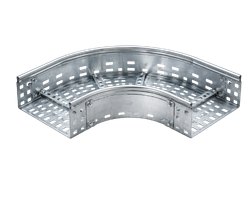
Turn the tray route in the horizontal plane while coordinating the cable bend radius.
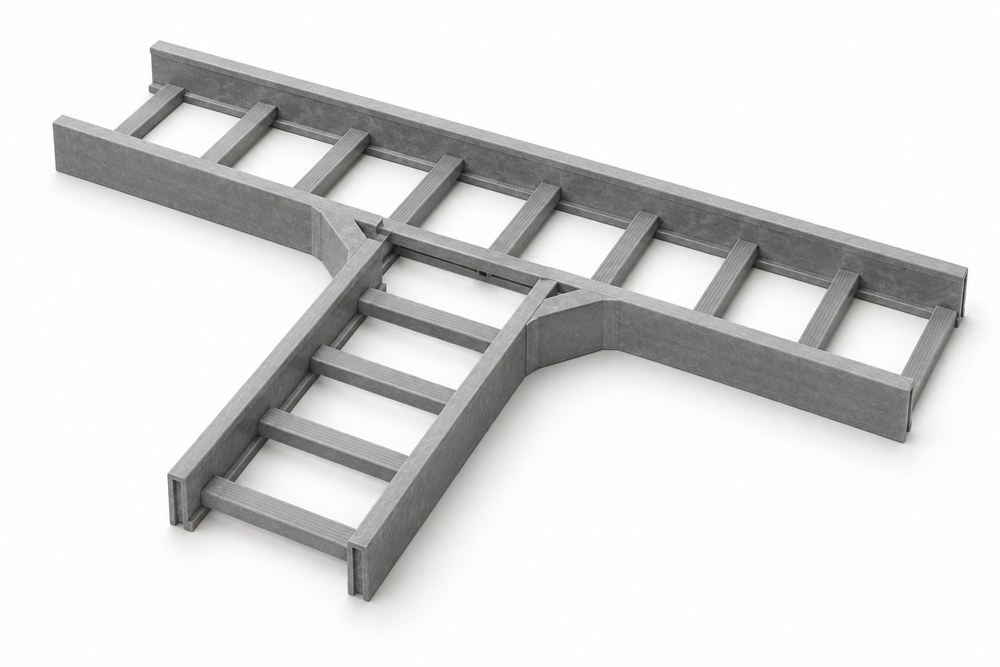
Create a three-way branch within the composite ladder route.
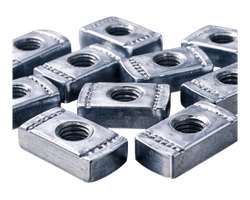
Match the nut profile, thread size and engagement with the actual channel lips.
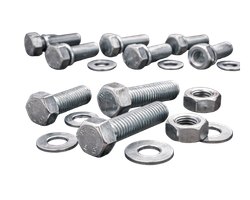
Schedule thread sizes, quantities and protective finishes for assembly.
Product illustrations show the accessory family. Final geometry and material follow the selected system.
Explore all cable management productsBring GRP/FRP, steel and HDG containment, fittings and support requirements into one product discussion.
Bonn Metal is a manufacturer and supplier. Its own hot-dip galvanising plant supports the metallic product range.
Discuss supply across all seven emirates, including Dubai and Abu Dhabi, with the project location and programme.
Start with the product name and intended installation.
Add sizes, quantities, finish and location when available.
Review the proposed product, documentation and supply terms.